

5 Essential Facts About Natural Gas ESD Valves
- 2026-08-12 08:52:59
- admin
- NO COMMENTS
At a natural-gas pressure-reduction station, an emergency shut-off valve may remain fully open for months without attracting much attention. Then, during a scheduled trip test, the solenoid exhausts as expected but the actuator hesitates. The stem starts to rotate, pauses, and finally reaches the closed position several seconds later than the original commissioning record.
Engineers inspecting this condition often find familiar evidence: moisture in the instrument-air line, increased packing friction, corrosion around the actuator linkage, or a seat damaged by long-term pressure pulsation. A slight packing leak may appear insignificant, yet gas collecting inside an enclosure creates a direct fire and explosion hazard. Pressure fluctuation causes microscopic movement at the closure element; repeated movement wears the seat; leakage increases; and the valve may no longer provide dependable emergency isolation.
For plants operating older imported ESD packages, the next problem is often commercial. The original valve may have an extended delivery time, a proprietary mounting interface, or a spare-parts quotation that is difficult to justify. A properly engineered 1:1 replacement offers a practical alternative. It can retain the original installation dimensions, pressure class, fail-safe action, control signal, operating speed, and required sealing performance at a more competitive price—provided that the replacement is verified from drawings, operating data, material specifications, and testing rather than copied by appearance alone.
5 Essential Facts About the Natural Gas Emergency Shut-Off Valve (ESD) You Need to Know
Fact 1: Understanding ESD Valves
Functionality of ESD Valves
An ESD valve isolates natural-gas flow after a safety system detects a condition that could develop into a fire, explosion, major release, or equipment failure. Typical initiating signals may include confirmed gas or flame detection, abnormal pipeline pressure, compressor trip, rupture indication, loss of a critical utility, or a manual emergency command.
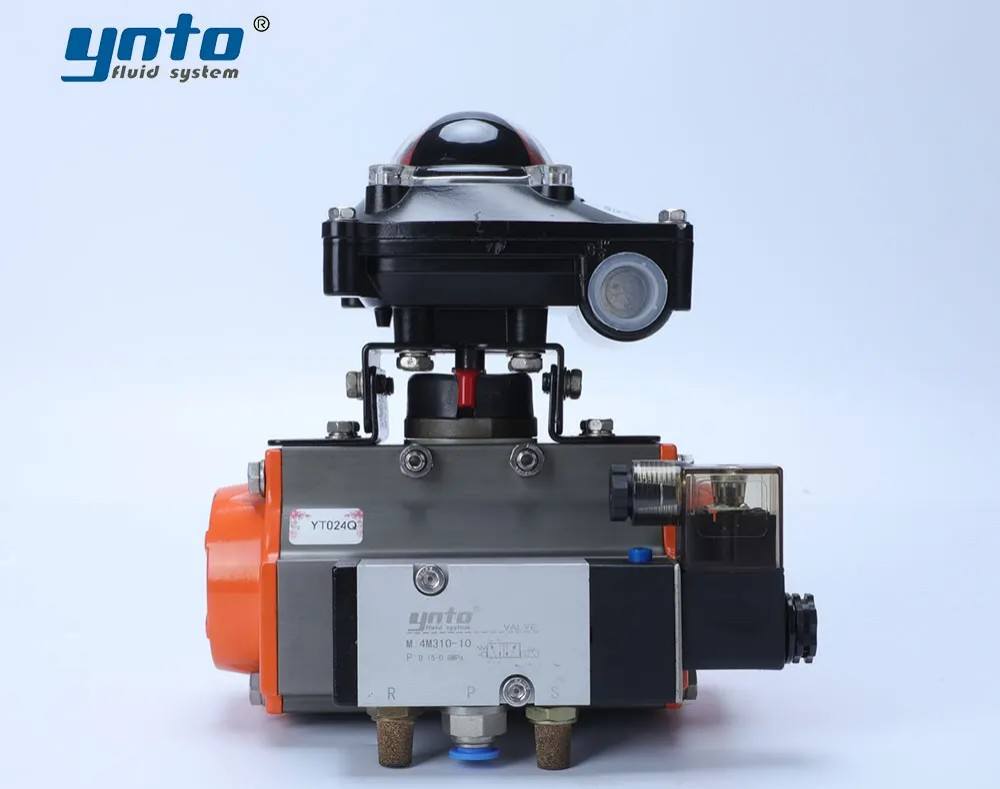
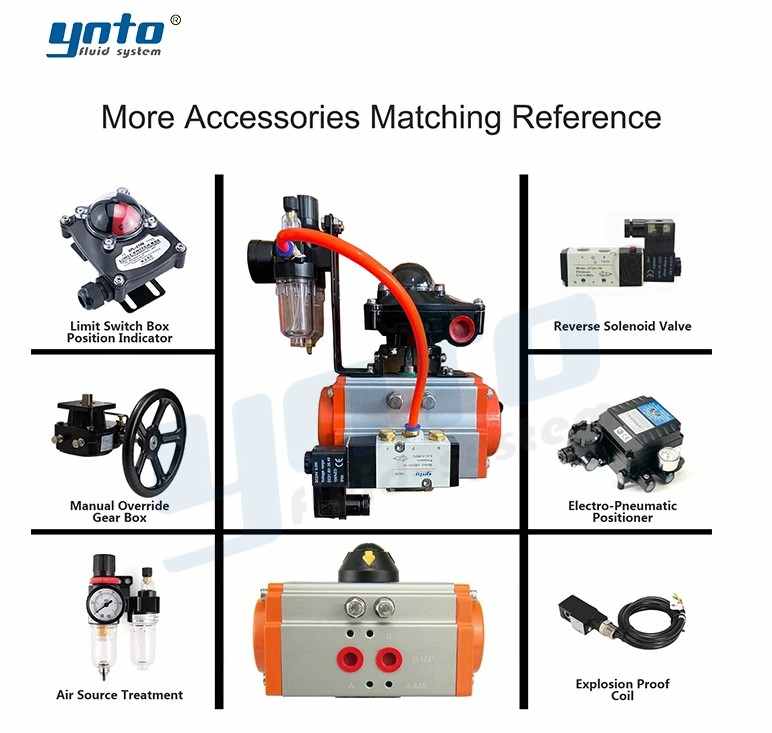
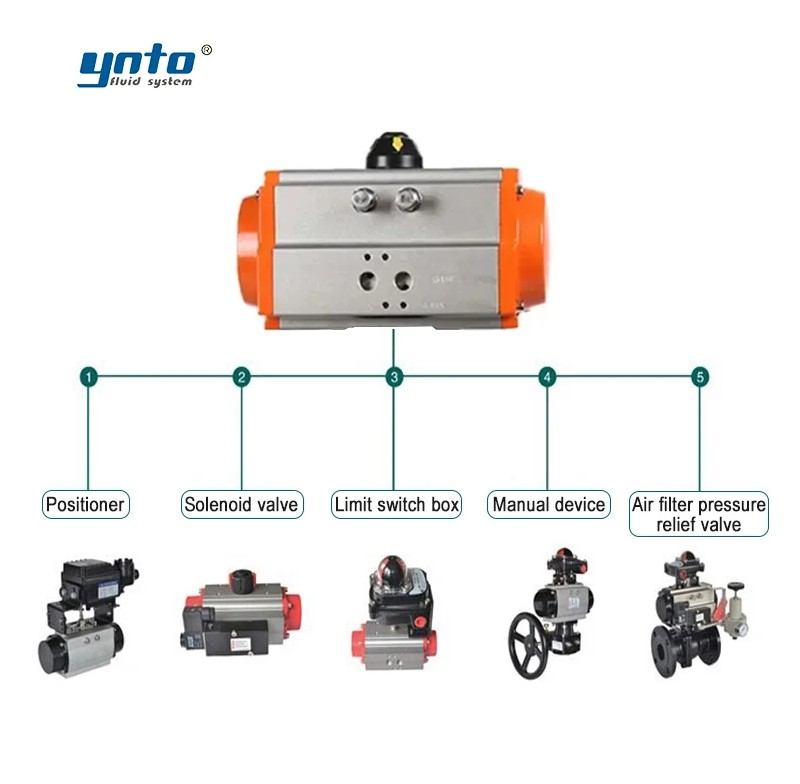
The complete assembly normally includes a quarter-turn ball valve, pneumatic or electric actuator, solenoid valve, limit switches, position indication, and an interface with the emergency response system. For gas duties, pneumatic spring-return actuation is common because stored spring energy can move the valve to its predetermined safe position following loss of instrument air or electrical power.
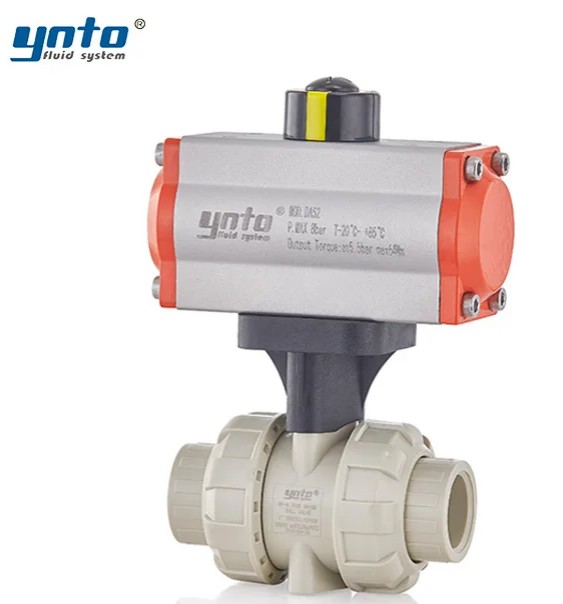
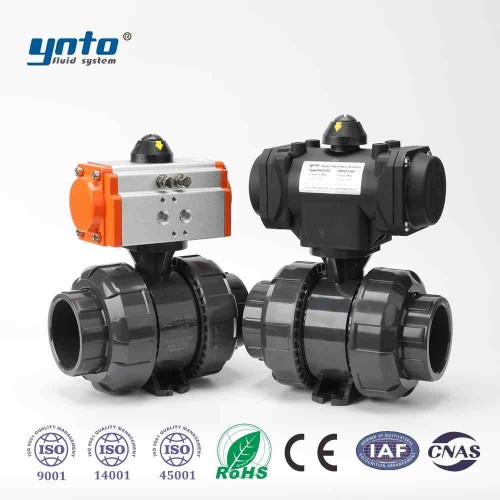
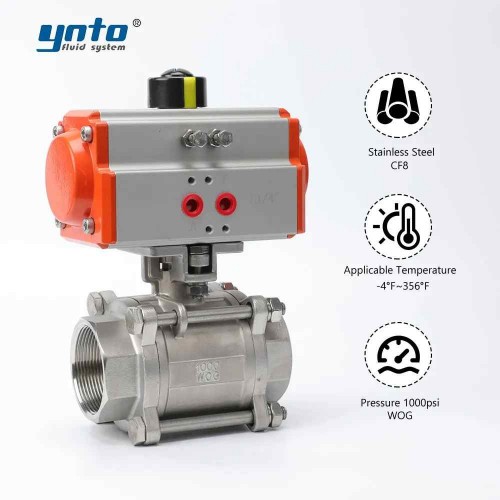
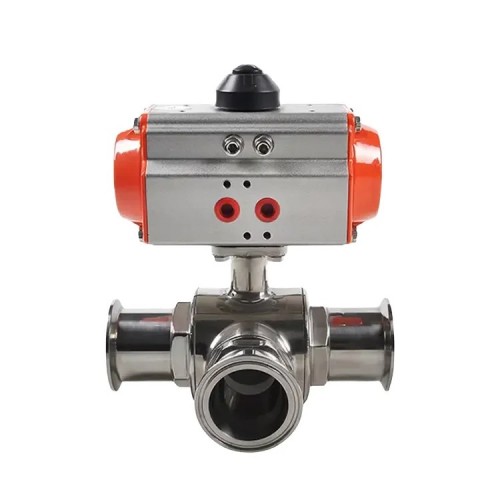
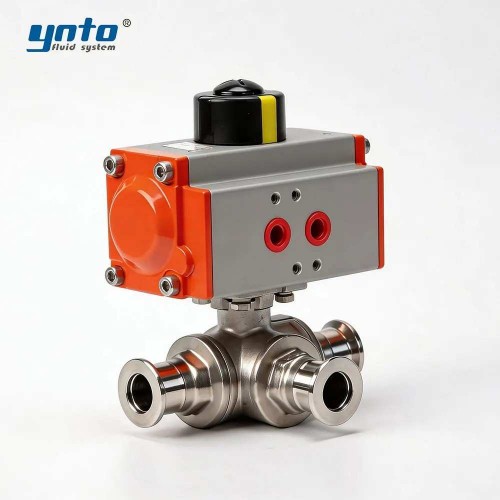
A buyer replacing an obsolete imported assembly can begin by comparing suitable pneumatic ball valve options, then selecting the body construction, bore, pressure rating, connection, actuator arrangement, and accessories around the actual shutdown duty. CNYNTO’s published range includes flanged, threaded, fixed, three-way, and automated configurations, but final ESD suitability must be confirmed against the project specification.
It is also important to distinguish an ESD valve from a rupture-mitigation valve governed by pipeline regulation. For certain covered U.S. transmission pipelines, PHMSA requires remotely controlled or automatic shut-off capability and specifies that necessary rupture-mitigation valves be closed as soon as practicable, within 30 minutes after rupture identification. The rule applies to defined pipeline scopes, not indiscriminately to every industrial gas valve.
Key Features to Look For
The first feature is dependable shut-off after long periods without movement. A valve that operates smoothly during weekly cycling may behave differently after remaining open for six months. Seat adhesion, dry seals, stem corrosion, and accumulated contamination all increase breakaway torque.
The second feature is a suitable closing time. Rapid closure can reduce the volume released after an incident, but closing a large gas line too abruptly may create pressure transients or disturb connected equipment. Stroke time should therefore come from the shutdown philosophy and pipeline analysis rather than from the assumption that faster is always safer.
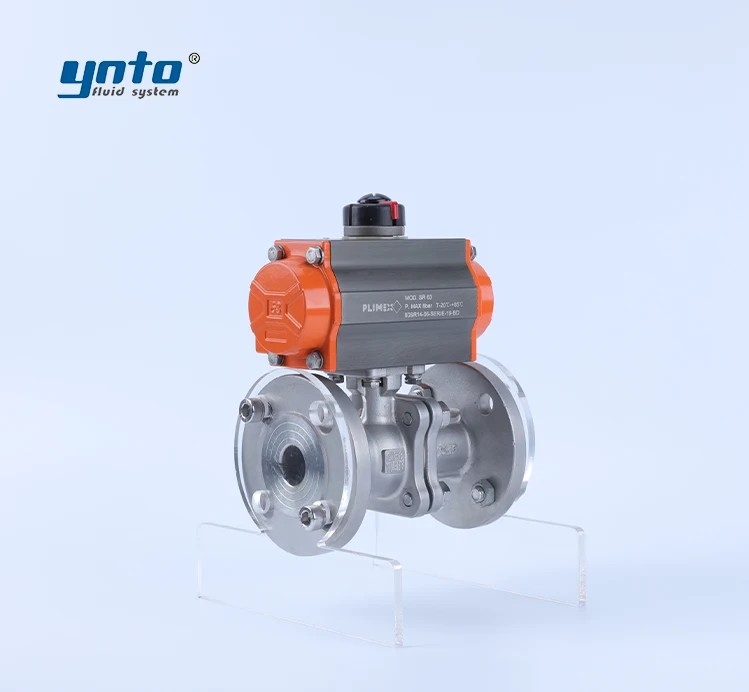
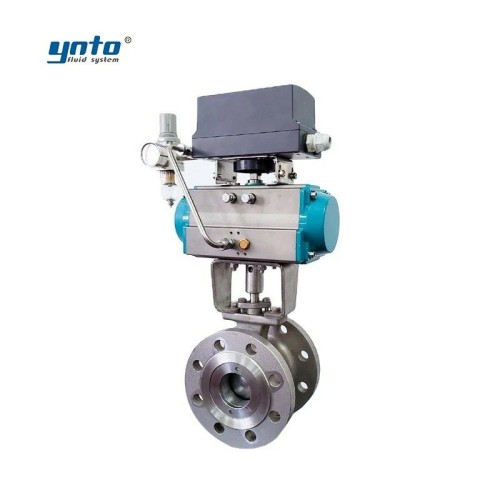
A stainless steel pneumatic flanged quarter-turn ball valve offers a full-flow path, low resistance, and several body and seat material options. Its published configurations extend to PN64, with PTFE, PPL, or metal seating, which makes it a useful engineering platform for replacement work. For natural gas, though, material compatibility, fire-safe construction, anti-static provisions, stem retention, leakage class, and actuator sizing must still be specified explicitly.
Carbon steel is widely used for gas-valve bodies because it provides strong pressure containment at a practical cost. Low-temperature carbon steel may be needed in cold climates or expansion services. A 316L body or trim can improve resistance in wet or mildly corrosive conditions, while Duplex or Super Duplex may be considered for severe chloride exposure. PTFE offers low friction and tight shut-off in many clean-gas duties; FKM may suit certain hydrocarbon and elevated-temperature conditions after compatibility review. EPDM should not be treated as a general natural-gas seal without manufacturer confirmation.
The material failure chain is direct: corrosive condensate or incompatible gas composition attacks the selected material, localized pitting or seal swelling develops, the pressure boundary or seating surface deteriorates, and leakage risk rises.
Fact 2: Emergency Gas Shut-Off Procedures
When to Activate an ESD Valve
An ESD valve should operate according to an approved cause-and-effect matrix. That document defines which detector combinations initiate shutdown, whether the action is automatic or manual, which equipment trips first, and how valve closure is confirmed.
Operators should not make these decisions from memory during an incident. OSHA’s Process Safety Management standard requires operating procedures to identify the conditions requiring emergency shutdown and assign shutdown responsibility to qualified operators. It also requires training on emergency operations, safe work practices, and the functions of safety systems.
During commissioning, engineers occasionally find that the mechanical valve is healthy while the shutdown chain is incomplete. A gas detector may not be mapped to the correct logic solver input. A solenoid may use the wrong voltage. The limit switches may show an inverted state. These faults are especially dangerous because the control-room graphic can create the impression that protection is available when the field assembly has never been tested as a complete loop.
Step-by-Step Shut-Off Process
Once a valid initiating condition is confirmed, the safety system sends the trip command. Depending on the design, the solenoid valve vents or redirects instrument air. A spring-return actuator then drives the valve toward the fail-safe position. Independent limit switches report travel, and upstream and downstream pressure trends confirm whether isolation has actually occurred.
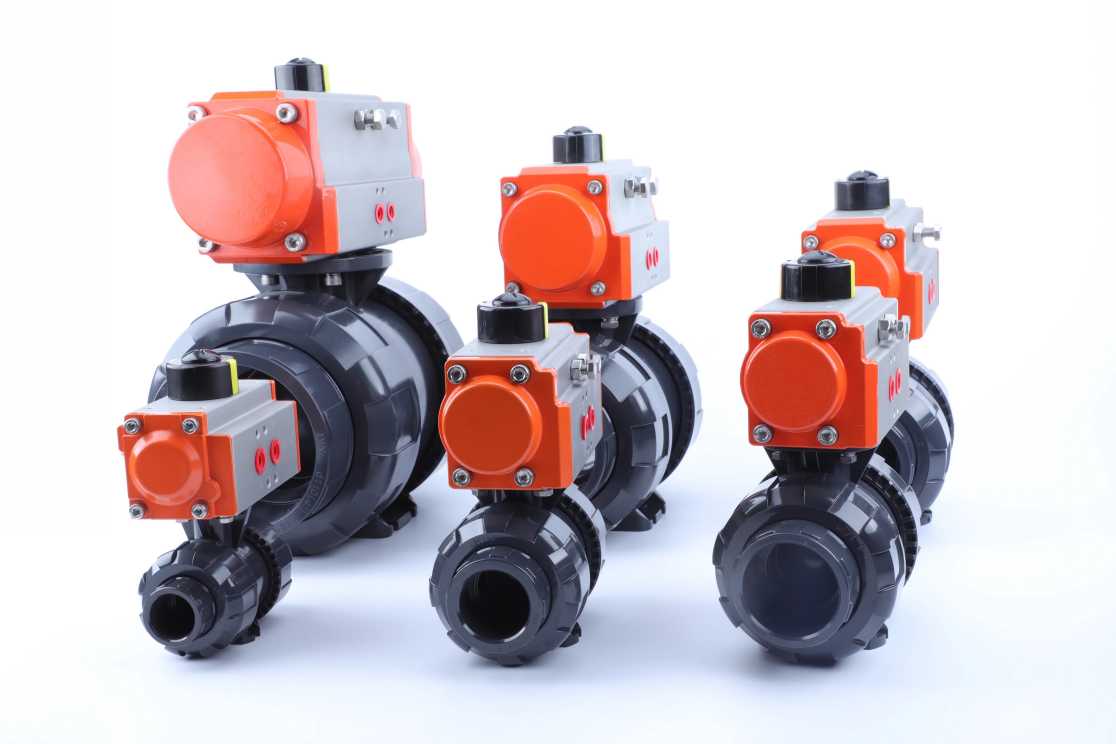
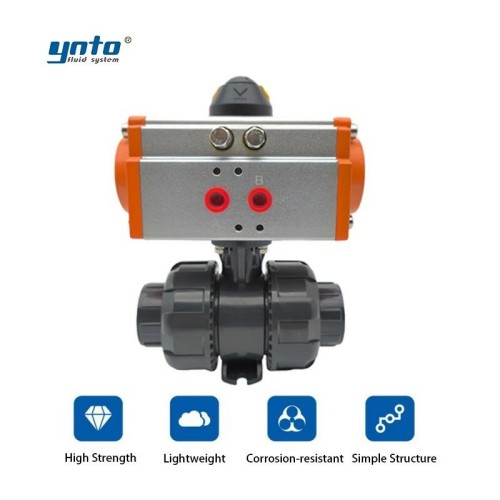
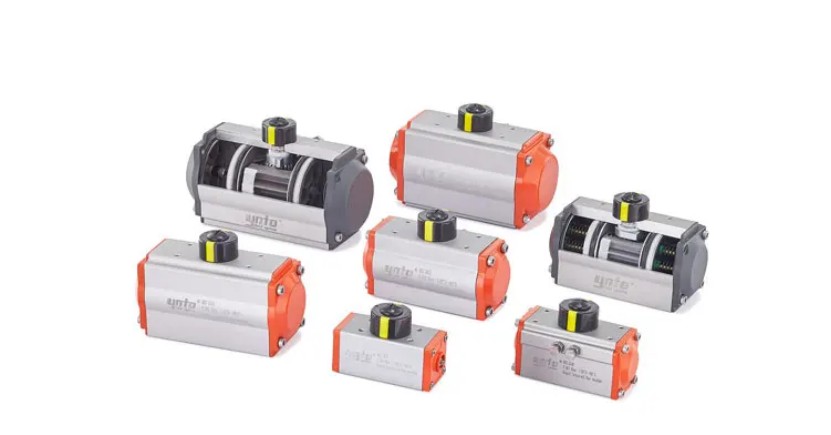
A correctly matched pneumatic valve actuator can provide ISO 5211 mounting and NAMUR accessory interfaces, supporting installation of solenoids, switches, and positioners. CNYNTO lists single-acting fail-open or fail-close arrangements as well as double-acting options, with defined operating-air requirements.
For a 1:1 replacement, actuator matching must include more than flange size. Required output torque should account for maximum differential pressure, seat friction, low-temperature effects, aging, and a suitable safety factor. The supplier must also reproduce the original air connections, travel direction, fail position, limit-switch logic, and operating time.
After closure, personnel should confirm isolation through the approved operating procedure. No one should open the piping or remove the actuator merely because the local indicator shows “closed.” Gas may remain trapped between valves, and internal seat leakage may continue. Depressurization, gas testing, lockout, ventilation, and work authorization remain necessary.
Fact 3: Enhancing Pipeline Safety
ESD Valves as a Safety Standard
An ESD valve is one protective layer. It does not replace gas detection, pressure relief, corrosion control, fire protection, safe operating procedures, or competent emergency response. Its purpose is to reduce the inventory feeding an incident after a dangerous condition has been identified.
PHMSA’s valve rule was developed to improve rupture response and limit the public and environmental consequences of major pipeline releases. For covered installations, the regulations address valve positioning, monitoring, operation, inspection, maintenance, and risk analysis. They also require monitoring of valve status and relevant upstream and downstream pressures for applicable rupture-mitigation systems.
Valve construction and testing should be tied to recognized requirements. ASME B16.34:2025 covers pressure-temperature ratings, materials, dimensions, nondestructive examination, testing, and marking for applicable industrial valves. API 6D, currently listed by API as the 25th Edition with Addendum 3 issued in March 2025, defines manufacturing requirements for pipeline valves. ISO 17292 specifies metal ball valves for petroleum, petrochemical, natural-gas, and related applications. DIN EN 12266-1 establishes pressure tests, test procedures, and acceptance criteria for metallic valves.
Compliance with a valve standard does not automatically qualify the complete ESD system. The final assembly may also require fire-safe testing, hazardous-area certification, functional-safety assessment, fugitive-emission verification, and project-specific factory acceptance testing.
Case Studies of ESD Valve Success
Successful ESD operation often leaves little to photograph. A detector trips, the valve closes, pressure decays, and the incident remains limited. The absence of escalation is the result.
The consequences of delayed isolation are better documented. PHMSA notes that it took more than 90 minutes to stop gas flow after the 2010 San Bruno pipeline rupture, an event that killed eight people, injured dozens, and destroyed homes. This history helped drive requirements for faster rupture identification and valve closure.
An effective replacement project should therefore be tested as a complete assembly. During factory acceptance testing, engineers should verify valve stroke time, actuator output, solenoid response, position feedback, loss-of-air behavior, loss-of-power behavior, seat leakage, and shell integrity.
A less expensive 1:1 replacement should never achieve its price advantage by reducing actuator torque, material grade, testing scope, or safety accessories. The economic benefit should come from direct manufacturing, fewer distribution layers, flexible customization, and elimination of imported-brand premiums.
Fact 4: Risk Mitigation Strategies
Reducing Hazards in Gas Distribution
Correct placement is the first risk mitigation strategy. An ESD valve should isolate the smallest practical hazardous inventory while remaining accessible for inspection and proof testing. The arrangement must also provide a controlled way to release pressure trapped between isolation points.
Mechanical integrity is the second strategy. Engineers should trend closing time, actuator pressure, valve position, solenoid condition, packing leakage, and pressure decay after closure. A stroke that gradually changes from five seconds to eight seconds is not merely an instrumentation detail; it may be the first sign of increasing friction.
Instrument-air quality produces another recognizable cause-and-effect chain: moisture and contamination enter the actuator system, internal corrosion or sticking develops, movement slows, and emergency isolation takes longer than designed.
For large valves requiring higher torque, an AW spring-return pneumatic actuator can be configured in single-acting or double-acting form and equipped with solenoid valves, switches, transmitters, and manual controls. CNYNTO identifies oil-and-gas service among its intended applications. In an ESD package, the selected model must still be sized from the valve’s maximum required torque rather than nominal pipe diameter.
Environmental safety is closely connected to isolation speed and seat integrity. Methane released during a rupture presents an immediate fire risk and also contributes to greenhouse-gas emissions. PHMSA explicitly identifies reduced emissions and environmental consequences among the intended benefits of remotely controlled and automatic shut-off requirements.
Training Staff on Emergency Protocols
Personnel must understand what initiates a shutdown, which valves move, which compressors or burners stop, and what indications confirm success. They also need to know when local intervention is prohibited.
Training should cover normal testing, abnormal operation, manual activation, evacuation, restarting, and management of bypassed safety functions. OSHA requires employees involved in covered processes to receive training on process hazards, emergency shutdown, and safe work practices, with documented refresher training. The same standard places emergency shutdown systems, valves, sensors, alarms, and interlocks within mechanical-integrity requirements.
Partial-stroke testing may help identify sticking or actuator deterioration without fully interrupting operation. It does not replace full-stroke proof testing at the required interval, nor should it be introduced without reviewing its effect on the safety instrumented function.
Fact 5: The Future of ESD Valves
Innovations in Emergency Response Systems
Future ESD systems will provide more diagnostic information before a failure demand occurs. Valve travel time, actuator pressure, motor current, solenoid response, vibration, and actual stem position can be monitored continuously. Trend changes can then trigger maintenance before the valve fails a proof test.
Industry ESD packages already combine fast actuation with functional-safety capability. Habonim, for example, markets an ESD package certified for use in a SIL 3 loop and emphasizes rapid gas-line closure and oversized actuation. This illustrates the direction of the market, although any SIL claim applies to the documented product configuration and safety function—not to an arbitrary valve assembled from individual components.
A pneumatic thin-wall ball valve provides another useful replacement platform where the original installation has limited face-to-face space. CNYNTO lists single-acting spring-return actuation, ISO 5211 mounting, feedback accessories, and pressure ratings up to PN64. These features can support a dimensional and functional replacement, subject to gas-service, fire-safe, leakage, and actuator verification.
The latest ISO 5211:2026 defines part-turn actuator attachment dimensions, drive-component dimensions, and reference torque values. Wider use of standardized interfaces should make future pipeline maintenance less dependent on proprietary brackets and stem couplings.
Predictions for Pipeline Maintenance
Pipeline maintenance will increasingly move from fixed intervals toward condition-informed planning. A valve may still require periodic proof testing, but digital records will make it easier to identify which component is degrading and why.
For 1:1 replacement projects, digital scanning, CAD comparison, material verification, and recorded torque testing will shorten the engineering cycle. The replacement manufacturer can reproduce the original face-to-face dimensions and control interface while improving weak points such as actuator margin, coating quality, seal selection, or feedback capability.
The commercial argument remains important. Imported replacement valves often carry long lead times and brand-related pricing. YNTO can provide a more affordable engineered alternative while maintaining specified performance, but the claim must be demonstrated through dimensional inspection, material certificates, pressure testing, leakage testing, functional testing, and documented actuator calculations.
That is the real meaning of 1:1 replacement: not a look-alike valve, but a verified substitute that fits the existing system and performs the same safety function.
.png?imageMogr2/format/webp)
- 2026-09-30 08:25:23
- 2026-09-28 10:28:43
- 2026-09-21 15:23:44