

How a Negative Pressure Maintaining Valve Enhances Safety and Efficiency
- 2026-05-20 14:47:53
- admin
- NO COMMENTS
Introduction
During shutdown cleaning on a solvent blending vessel, the exhaust skid is supposed to hold the tank slightly below atmospheric pressure. On paper that sounds easy. In the field, engineers often watch the gauge swing from about -2 to -7 kPa while a valve on the header chatters for a second before settling. A faint odor around a hatch seal, or a dust collector that no longer pulls evenly, is usually the first clue that the negative-pressure loop is losing control. In tank-entry and local exhaust work, maintaining controlled negative pressure is not optional; it is part of keeping hazardous dusts and vapors from escaping the work zone.
In many plants, the real problem is not a dramatic valve failure. It is instability. During commissioning, engineers often notice delayed response at low flow, a little stick-slip near the setpoint, or a shutoff element that begins leaking only after repeated temperature cycling. Pressure fluctuation → plug micro-vibration → seat wear → slower response is a familiar chain. Another one appears over time in hot-and-cold service: thermal cycling → seal fatigue → micro-leakage → higher fan or pump energy demand. That is exactly where a negative pressure maintaining valve starts to justify its cost.
Defining Negative Pressure Systems
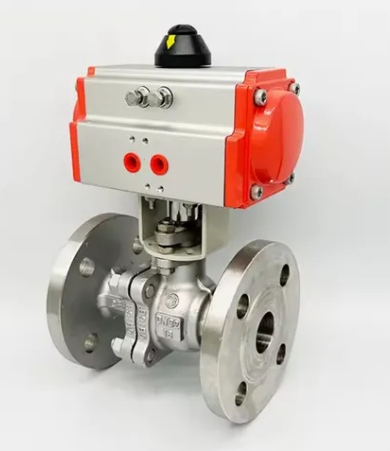
A negative pressure system operates below ambient pressure, but the applications are broader than many buyers assume. Engineers see controlled vacuum in evaporation skids, distillation units, dust collection headers, battery slurry production, semiconductor chambers, powder transfer lines, solvent storage tanks, and confined-space ventilation. As Busch Vacuum Solutions notes, vacuum is technically negative pressure below atmospheric pressure, and industrial evacuation systems are built around reaching and holding a defined target pressure inside a vessel or chamber. The key is not merely to create vacuum. It is to hold the correct level of vacuum while temperature, flow, leakage, and equipment loading keep changing.
Significance of Venting Solutions
This is why venting solutions matter. A pump by itself cannot hold system stability. A reliable installation also needs the right regulator, relief path, isolation valve, and operating logic so the process never drifts into unsafe vacuum and never loses containment. API Standard 2000 explicitly requires vacuum relief devices for atmospheric and low-pressure storage tanks to avoid excessive vacuum, while OSHA rules require tanks and vessels to be adequately vented so vacuum or pressure does not exceed design limits. In practical terms, good venting design is tied directly to safety, uptime, and product quality.
Objective of the Article
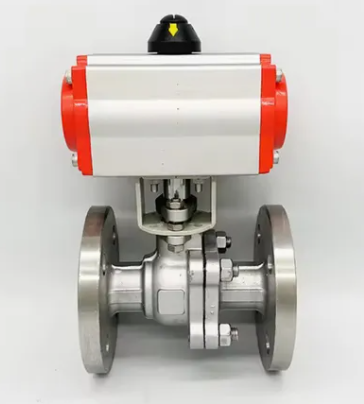
This article examines the subject from a plant engineer’s viewpoint rather than a catalog description. The focus is on how a negative pressure maintaining valve works inside a complete pressure-management loop, why materials and standards affect long-term performance, and where pressure control valve packages, pneumatic control valves, and vacuum-rated shutoff products from CNYNTO fit into a practical industrial solution.
Components of Negative Pressure Systems
Overview of Negative Pressure Maintaining Valves
A negative pressure maintaining valve is usually a self-operated or pilot-assisted regulator that throttles flow to keep the process at a defined vacuum setpoint. In one arrangement, the valve modulates between the process and the vacuum source, reducing the pull when vacuum becomes too strong. In another, it admits a controlled amount of gas into the system when vacuum exceeds the allowable range. As Equilibar explains, a vacuum regulator maintains vacuum pressure by adjusting its opening as system conditions fluctuate, while a vacuum breaker or relief regulator lets ambient gas into the process when vacuum gets too high. In practice, buyers should view it as a specialized electric control valve or regulating valve designed for vacuum duty, not as a simple open-close accessory.
Relationship with Pressure Control Valves
The mechanics are familiar to anyone who has tuned a regulator loop: a restricting element, a measuring element such as a diaphragm, and a loading element such as a spring. Emerson describes those same three essentials in direct-operated regulators, and CNYNTO’s self-operated regulator follows that principle by using process pressure as the energy source to reposition the trim without external power. For tighter automation, that type of regulator can be paired with an electric actuator or replaced by a faster-response actuated control valve. The choice depends on whether the line needs passive stability, remote adjustment, or full PLC/DCS integration.
Role of Industrial Vacuum Systems
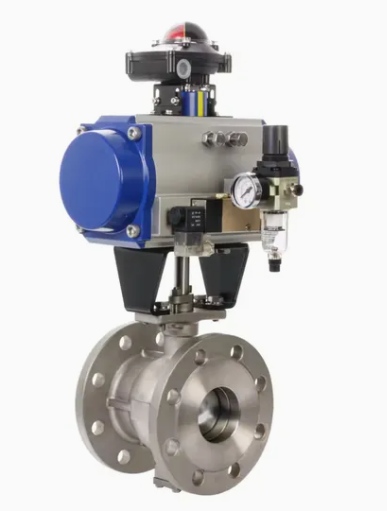
Many industrial vacuum systems are centralized. One vacuum source may feed several machines, vessels, or hoppers, each with a different local demand. That saves utilities and maintenance, but it also means one branch can upset all the others. Equilibar’s material-handling guidance notes that shared vacuum systems can experience rapid vacuum changes when one machine needs a different level of vacuum or when another machine goes offline; a local regulator is used to hold the required vacuum regardless of header perturbations. That is exactly why local maintaining valves matter, and why isolation hardware such as an electric vacuum butterfly valve appears so often in real systems. CNYNTO also highlights vacuum-duty valves in its mechanical processing applications and vacuum concentration case work.
Safety Implications
Risks Associated with Inadequate Pressure Control
Negative pressure problems are easy to underestimate because the forces appear small until a vessel roof distorts, a process chamber loses purity, or outside contaminants are drawn inward. Guidance across tank, piping, and water infrastructure makes the point clearly: inadequate venting can let pressure or vacuum exceed design limits, and negative pressure in piping can contribute to contaminant intrusion or joint failure. Bentley’s guidance also warns that negative pressures can go below vapor pressure limits, which indicates a physically impossible steady condition because a vapor pocket would have formed. In plant language, an undersized suction header or a clogged filter can create excess head loss → localized vacuum drop → vapor pocket or ingress path → process instability and safety exposure.
Enhancing Safety Protocols with Valves
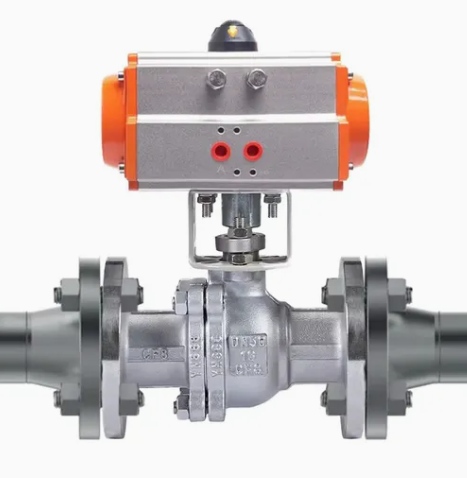
A robust safety strategy uses layers, not a single valve. The maintaining valve handles normal modulation. A vacuum relief device or breaker limits abnormal vacuum. Isolation valves simplify lockout and maintenance. For toxic, corrosive, or high-purity service, a diaphragm valve is often a smarter choice than conventional packed trim because it reduces fugitive leakage paths; CNYNTO’s diaphragm range includes 316L and PTFE-lined options for sanitary and corrosive service. In storage duty, a nitrogen sealed valve may be paired with vacuum relief and blanketing logic to protect the tank atmosphere when pressure moves above or below the intended band.
Material selection is part of safety, not an afterthought. 316L stainless steel is a dependable choice for clean vacuum service, condensate, and many mildly corrosive gases. Duplex and Super Duplex make sense where chlorides or aggressive water chemistry threaten pitting. PTFE linings or fluoropolymer bellows are valuable when solvent vapors or corrosive media would attack bare metal. EPDM is often suitable for water-based utility vacuum loops, while FKM performs better around hydrocarbons and solvent vapors. Carbon steel or alloy steel remains economical for dry gas and higher-pressure structures, and external barriers such as FBE or Halar coatings add another layer of corrosion defense where ambient chemical exposure is a concern. CNYNTO’s own materials guidance and product pages reflect that same selection logic.
Standards matter because buyers are really buying risk control. ANSI/ASME pressure-temperature classes influence whether a valve body and connection can survive abnormal load. ASME B16.34 covers pressure-temperature ratings, dimensions, materials, nondestructive examination, testing, and marking for many industrial valves. API 2000 defines venting and vacuum-relief requirements for atmospheric and low-pressure storage tanks, and API 527 defines seat-tightness methods and acceptable leakage rates for pressure relief valves. ISO 4126 sets general requirements for safety valves, while ISO 5211 and corresponding DIN interfaces standardize actuator attachments and European-aligned safety-valve practice. For engineers on site, these documents are not paperwork. They decide whether the valve will hold pressure, seal correctly, and integrate cleanly with the rest of the system.
Case Studies of Failure Incidents
History shows why this discipline matters. In the D.D. Williamson investigation, the CSB reported that one tank had previously been deformed on two occasions by misapplied vacuum before the Louisville explosion. That is a hard lesson for buyers: once a vessel has seen vacuum distortion, relief philosophy, inspection, and valve sizing must be revisited, not simply patched. Meanwhile, OSHA’s guidance for tank and vessel work continues to rely on maintaining negative pressure and proper filtration so hazardous dust stays inside the controlled envelope rather than drifting into the work area.
Performance and Efficiency
Operational Benefits of Negative Pressure Maintaining Valves
A stable negative-pressure loop improves much more than safety. In evaporation and concentration duty, steady vacuum sharpens boiling behavior and shortens recovery time after disturbances. In dust handling or solvent transfer, it lowers product loss and keeps emissions predictable. In shared vacuum headers, it prevents one machine from robbing another of performance. That is why buyers often move from a basic on-off arrangement to a modulating pneumatic sleeve control valve or self-operated regulator once they start chasing cycle consistency and utility savings instead of only minimum capital cost. CNYNTO’s vacuum concentration application notes that its pneumatic valves regulate vacuum pressure dynamically to maintain optimal process conditions.
There is also a direct energy argument. Traditional systems often rely on a vacuum pump pulling hard all the time while operators trim performance with manual throttling or by bleeding in excess air. Load swings then create another familiar chain: over-pulled vacuum → unnecessary bleed or recycle flow → more pump work → wasted power and unstable control. A correctly sized vacuum pressure regulator breaks that cycle by keeping the setpoint closer to the real process demand. Jordan Valve and Equilibar both emphasize accurate vacuum control as the foundation for stable vacuum performance rather than simple reactive relief.
Comparative Analysis: Traditional vs. Enhanced Systems
Compared with a simple vacuum breaker, an enhanced system gives much tighter control. A breaker is useful as a protective device, but it is not always precise across a wide flow window and can waste energy by admitting more gas than the process actually needs. A dedicated regulator or maintaining valve modulates rather than reacts crudely, so turbulence, noise, and setpoint drift stay lower. Add centralized monitoring and the benefit grows again: Edwards Vacuum says its central vacuum controller can maintain a stable inlet-pressure setpoint, enable remote access and alerts, and deliver energy savings versus traditional sequencing. That is a very different operating profile from manual adjustments and reactive maintenance.
Best Practices for Maximizing Efficiency
In many field operations, the best results come from getting the basics right before adding complexity. First, size the valve for real operating flow, not only worst-case pump capacity. Second, trace the source of any negative-pressure event upstream; Bentley’s troubleshooting guidance shows that excess head loss, poor pump selection, inaccurate demand assumptions, or a high point without proper air handling are often the real culprits. Third, choose trim and seals that suit both the medium and the temperature cycle. Finally, build in diagnostics through switch feedback, position indication, or smart valve hardware rather than waiting for vibration or leakage to expose the problem. CNYNTO’s recent smart-valve and Modbus actuator content points the same way: modern valves increasingly provide health monitoring, precise digital positioning, and richer fault data for faster troubleshooting.
Conclusion
Recap of the Importance of Negative Pressure Valves
A negative pressure maintaining valve is one of those devices that looks modest until the day the process goes unstable. It protects product quality by holding a repeatable vacuum level. It protects equipment by preventing excessive vacuum and reducing control hunting. And it protects people by supporting safer ventilation, safer vessel operation, and better containment.
Future Innovations in Pressure Management
The next step is already visible. Vacuum systems are moving toward tighter digital integration, with connected controllers, email alerts, cloud-ready diagnostics, and smart valves that can report their own health. Emerson’s pressure-vacuum relief portfolio already points users toward wireless monitoring, Edwards emphasizes centralized connected control, and CNYNTO’s smart-valve content highlights onboard diagnostics and health monitoring as part of newer electric control technology. For procurement teams, that changes the buying logic. The question is no longer only whether the valve opens and closes. It is whether the valve can become part of system integrity monitoring, predictive maintenance, and plant-wide efficiency management.
Call to Action for Industries
If your plant is seeing vacuum drift, containment concerns, or rising energy use around exhaust and vacuum headers, it is worth reviewing the valve architecture rather than only the pump. CNYNTO offers self-operated pressure regulators, automation-ready control valves, vacuum-rated butterfly valves, corrosion-resistant diaphragm valves, and inerting solutions that can be combined into a practical negative-pressure package. For buyers who need a tailored answer instead of a generic fitting, start with the valve duty, medium, temperature cycle, and control target—then match the hardware from proven industrial ranges such as its electric butterfly valve lineup and related control products.
.png?imageMogr2/format/webp)
- 2026-09-30 08:25:23
- 2026-09-28 10:28:43
- 2026-09-21 15:23:44